
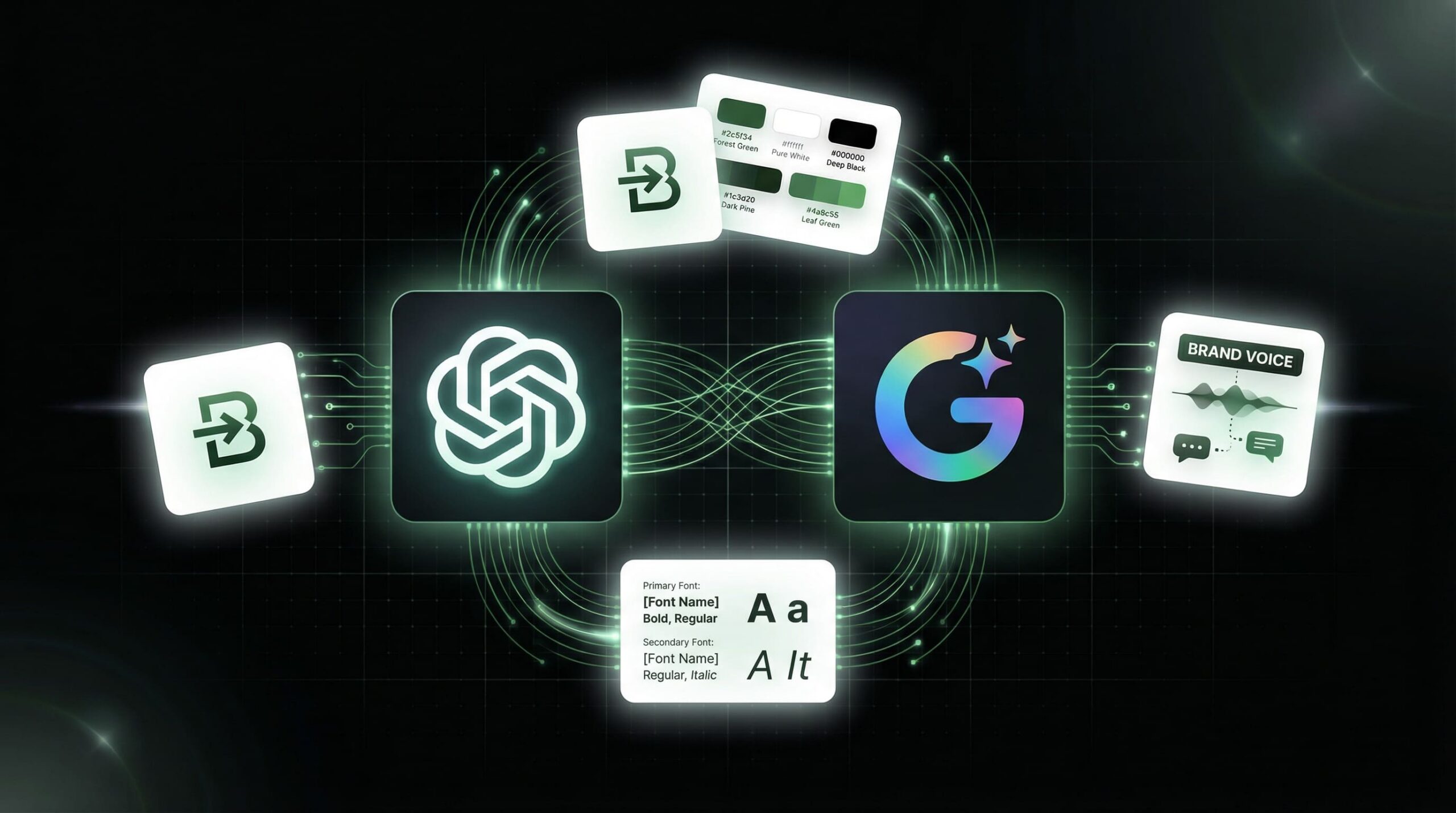
1. Why AI Content Falls Flat Without Brand Training
Generic blogs. Off-tone captions. Product descriptions that feel like they were written by a stranger. These aren’t AI problems — they’re training problems.
If you don’t feed the algorithm your brand voice, tone, offer, and Ideal Customer Profile (ICP), you’ll get fluff every time. The tool isn’t broken — it just doesn’t know you yet.
It’s under-informed.”
2. What Does “Educating AI” Actually Mean?
It’s not just uploading a style guide and hoping for the best. Truly educating an AI means giving it the full picture of who you are:
- Feeding it your bios, brand mission, past high-performing content, and detailed ideal customer profiles
- Providing clear examples of your tone — and explicit examples of what you don’t want
- Testing outputs iteratively, then refining your prompts until the AI mirrors your voice
- Documenting what works in a reusable AI Playbook for your entire team
Think of it less like a software update and more like onboarding a highly capable new hire who needs context to perform.
3. Where Most Businesses Get It Wrong
The most common mistake? Treating ChatGPT like a vending machine. You punch in a prompt, hit return, and expect polished, on-brand gold.
But learning how to train ChatGPT for brand voice isn’t a set-it-and-forget-it process — it’s a relationship that depends entirely on the context you provide. Without it, you get surface-level results that erode trust and fail to convert.
Using one-line prompts with zero brand context. Never testing multiple output variations before publishing. Assuming the AI “knows” your industry or audience by default. Skipping the review loop — and letting subpar content go live.
4. WonderMine’s Framework: Train, Test, Adjust
We guide clients through a structured brand-AI sync process built around three phases:
| Phase | Action | What It Looks Like |
|---|---|---|
| 🎯 Train | Input brand assets | Mission, bios, tone guide, ICP, and sample content loaded into context windows or custom GPTs |
| 🧪 Test | Generate & evaluate | Run 5–10 output variations, score against brand criteria, identify gaps and patterns |
| ⚙️ Adjust | Build your AI Playbook | Document winning prompts, tone rules, and do/don’t examples for consistent team use |
It’s like onboarding a new team member — your AI needs to get you before it can truly work for you. And once it does? The quality difference is night and day.
5. Why This Matters More Than Ever in 2026
The stakes have never been higher. Google has accelerated its shift toward AI-generated answer surfaces, and social platforms are increasingly using LLMs to auto-curate and rank content. Your content isn’t just being read by humans anymore — it’s being evaluated by algorithms.
If your AI-facing brand presence is untrained and inconsistent, you risk losing search visibility, reducing conversions from off-voice messaging, and damaging the brand credibility you’ve spent years building. Trained AI content isn’t a nice-to-have in 2026 — it’s a competitive necessity.
Your brand deserves better than generic content.
Let’s build your AI content system the right way — tailored, trained, and built to convert.